The Best Waterproofing Systems for Flat Roofs in Mediterranean Climates: A 2026 Technical Guide
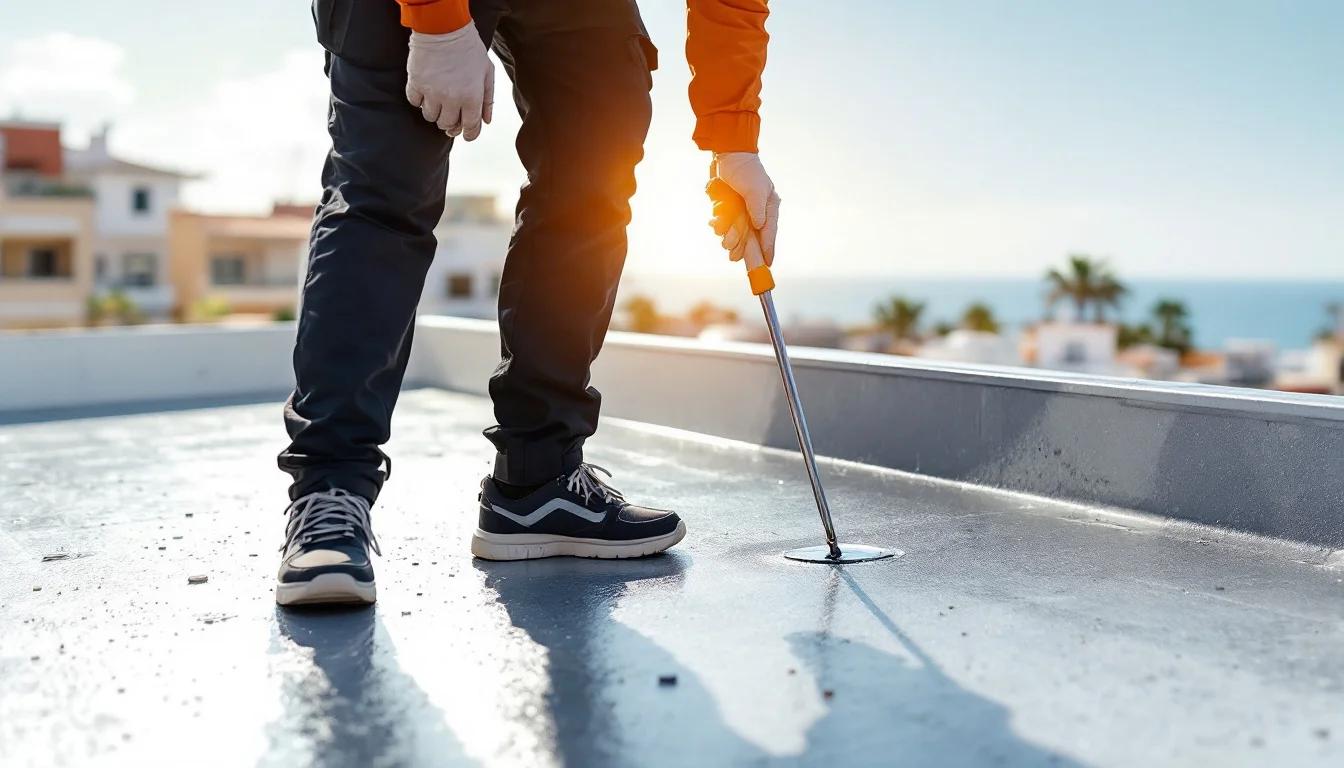
Modern flat-roof villas present a striking architectural silhouette along the Mediterranean coast, perfectly complementing the rugged coastal geography. However, behind these clean, minimalist lines lies a highly exposed technical envelope. A flat roof in this environment is not merely an aesthetic design choice; it is a critical defensive barrier that faces constant hostility from the surrounding climate.
Protecting a flat roof in coastal regions such as the Costa Blanca requires reconsidering traditional seam-based waterproofing systems. Built for milder conditions, conventional overlapping membranes are highly vulnerable under the region's extreme day-night thermal cycling, which continuously stresses the building envelope.
To ensure long-term watertightness, property owners must evaluate modern alternatives. The industry increasingly utilises either seamless liquid polyurethane that adapts to structural movement, or specialised green roofs that actively shield the waterproof layers from environmental degradation.
Key Takeaways
- Intense UV exposure and severe thermal cycling cause mechanically seamed roofing joints to weaken over time.
- Seamless liquid membranes eliminate the vulnerability of overlaps, preventing standing water from penetrating the structure after sudden seasonal downpours.
- Green roofs can help lower interior summer temperatures and extend the lifespan of the underlying waterproofing, provided the vegetation avoids severe summer water stress.
- Material specification must align with roof utility, separating hidden technical spaces from accessible terraces.
The Mediterranean Stress Test: Why Traditional Seams Are Vulnerable
Designing a durable building envelope requires understanding the exact environmental physics that will attack it. According to a technical article by regional construction specialists at La Quinta Fachada, Mediterranean coastal flat roofs face four specific stressors: intense UV exposure throughout the year, short but heavy seasonal rainfall, salty environments in coastal areas, and sharp thermal fluctuations between day and night.
These four factors work together to exploit the inherent weaknesses of traditional roofing materials.
The Mechanics of Joint Failure
The primary culprit behind premature roof failure is the severe temperature swing between a baking afternoon sun and a cool coastal night. This thermal cycling forces the entire building structure to expand and contract continuously. As outlined in product documentation by Lava 20 Waterproofing, this relentless thermal movement causes the joints of layered membranes to weaken, split, or separate entirely.
When a roof uses mechanically seamed overlaps, this constant physical shifting inevitably tears the joints apart.
The Threat of Seasonal Downpours
Once thermal cycling has compromised the overlapping seams, the structure is highly vulnerable to the region's intense, concentrated seasonal rainfall.
Ponding water forms rapidly because flat roofs drain slowly. Despite being designed with a slight fall, water inevitably collects in low spots, around drainage outlets, or in areas where the underlying roof structure has settled. This collected water stays on the surface for hours, placing immense hydrostatic stress on the membrane. When this standing water sits directly over seams that have already been weakened by thermal expansion, it quickly finds a path under the waterproof layer, leading to severe structural leaks.
Material Breakdown: Comparing Flat Roof Systems
Selecting the correct membrane requires matching the material's specific physical properties against the aggressive coastal climate stressors. Based on a technical article from La Quinta Fachada, the market offers four primary waterproofing categories, each with distinct operational parameters.
| Material System | Installation Method | Flexibility & Movement | Visual Finish |
|---|---|---|---|
| Bituminous (Asphalt) | Applied using heat | Less flexible with structural movements | Functional; usually protected with gravel or paving |
| Synthetic TPO / PVC | Heat-welded to create reinforced seams | High adaptability | Clean, modern synthetic finish |
| Liquid Polyurethane | Applied as a continuous waterproof paint | Highly adaptable; completely seamless | Attractive; looks good left exposed |
| EPDM (Rubber) | Professional sheet installation | Highly elastic and durable | Less attractive visual finish; limited availability |
Traditional Baseline: Bitumen
Bituminous, or asphalt, flat-roof membranes represent a traditional system. Installed using heat, these membranes offer good baseline waterproofing performance. However, they are highly sensitive to UV rays if left unprotected and must usually be covered with gravel or paving. More critically, their rigid nature makes them less flexible with structural movements, increasing the risk of failure in fluctuating temperatures.
Modern Synthetics: PVC, TPO, and EPDM
Synthetic PVC and TPO membranes serve as a modern alternative to traditional asphalt. They are highly resistant to sunlight and long-lasting. Installers heat-weld the edges, reducing joint count and creating reinforced seams. This allows for quick and lightweight installation, though the process requires highly skilled installers to prevent weld failures.
Alternatively, EPDM (synthetic rubber) is highly elastic and widely used on technical roofs or areas with demanding requirements. According to La Quinta Fachada, EPDM membrane lifespan can reach a theoretical maximum of 50 years under ideal conditions, and it offers excellent chemical and thermal resistance. However, its use in residential architecture is often restricted by a less attractive visual finish and limited availability in certain regional markets.
The Adaptable Solution: Liquid Polyurethane
Liquid polyurethane membranes bypass welded seams entirely by being applied like a continuous waterproof paint. They are specifically recommended for complex surfaces or areas with multiple structural junctions. For instance, the Lava 20 system is described by its manufacturer as a seamless polyurethane membrane that bonds to concrete, felt, asphalt, timber, metal, and EPDM; it is claimed to be crack-bridging, UV stable, resistant to ponding water, and is backed by a 25-year warranty. These are vendor claims and prospective purchasers should request independent technical data sheets for verification. The resulting layer is highly adaptable and visually appealing when left exposed. However, the application process is sensitive to errors, and the system requires periodic maintenance—typically applying a UV topcoat every 5 to 10 years—in continuously exposed areas.
The Science of Seamless: Why Liquid Membranes Excel
Traditional waterproofing depends on seams, overlaps, and joints, and every joint represents a potential entry point for water. Liquid waterproof membranes perform significantly better than seam-based systems precisely because they eliminate this geometric vulnerability.
Adapting to Structural Movement
A seamless liquid layer dynamically adapts to building movement. Because it cures into a single, unified rubberised shield, there are no overlapping edges for thermal expansion to pull apart. This monolithic barrier is inherently better equipped to resist extreme UV exposure and the heavy ponding water common after coastal storms.
Bridging Architectural Weak Points
The durability of a liquid membrane relies heavily on the preparatory application phases. Before the main coating is spread, installers address the existing vulnerabilities in the substrate.
During application, weak points such as existing joints, upstands, and structural cracks are physically bridged with reinforcing mesh. Only once this reinforcing mesh is secured is the liquid coating spread over the top. This critical step ensures that the cured membrane remains entirely continuous over movement-prone areas, permanently sealing the building envelope against moisture intrusion.
Green Roofs: Using Nature as a Waterproofing Shield
Integrating vegetation into flat roof architecture transforms a passive waterproof layer into an active, multi-functional building component.
Environmental and Thermal Benefits
In warm Mediterranean climates, green roofs offer substantial advantages that go far beyond aesthetics. Depending on substrate thickness and assuming the plants avoid severe summer water stress, the vegetation and growing medium can help lower interior temperatures during the summer, potentially reducing the building's overall cooling load. They also provide improved acoustic insulation and offer crucial support for urban biodiversity.
Specialized Technical Requirements
However, covering a roof in vegetation introduces a new mechanical threat: root intrusion. To function safely, green roofs require specialised root-resistant waterproofing. The underlying membrane must be chemically and physically capable of withstanding aggressive vegetation penetration over decades without compromising watertightness. If standard membranes are used beneath a vegetative layer, root growth can eventually compromise the waterproofing in its search for moisture, potentially leading to hidden leaks beneath the soil.
Decision Guide: Matching the System to the Roof's Purpose
Because no single material excels in every scenario, system selection on the Costa Blanca is strictly determined by the intended use of the roof space.
The Hidden Roof (Technical & Non-Accessible)
For functional spaces housing HVAC equipment, solar inverters, or areas that will not experience foot traffic, visual aesthetics are secondary to raw durability. In these non-accessible zones, property owners should specify exposed TPO for its intrinsic UV resistance, or bituminous membranes heavily protected with a thick layer of gravel to block UV degradation.
The Accessible Terrace
When the flat roof is designed as a living space or an exposed patio, the waterproofing must accommodate foot traffic and complex architectural features like parapets and structural seating. For these exposed and accessible roofs, liquid polyurethane or synthetic membranes finished with a protective ceramic tile layer offer the ideal combination of seamless protection and aesthetic appeal.
The Verdant Oasis
For roofs intended to support planting, standard materials will fail under root pressure. Green roofs absolutely require multi-layer root-resistant systems specifically adapted to dry climates, ensuring the building envelope remains secure beneath the continuous moisture of the soil bed.
Execution Matters: Avoiding the 4 Common Failure Points
There are four common flat-roof mistakes identified for this specific coastal region:
- Insufficient slope: The term 'flat roof' is an architectural illusion. Even completely flat-looking roofs must have a minimum gradient to direct water toward outlets. Without it, dangerous ponding occurs.
- Poor detailing at junctions: Leaks occur at poorly sealed joints, around drainage outlets, and along vertical parapets where the flat surface meets a wall.
- Incorrect material specification: The use of non-specialised, budget materials that quickly lose effectiveness under constant, direct sun exposure leads to rapid embrittlement and cracking.
- Lack of maintenance: Even perfect installations fail when property owners let fallen leaves, dust, or coastal debris block the drainage outlets, effectively causing severe water accumulation during seasonal rains.
Frequently Asked Questions (FAQ) About Flat Roof Upgrades
Can a leaking flat roof be coated over, or must it be replaced entirely?
Determining whether to strip a roof down to the substrate depends on the integrity of the underlying layers. Repair is generally sufficient when the roof structure is still intact. In many cases, a modern liquid coating can successfully restore the roof without the disruption and cost of full replacement. However, replacement is strictly indicated when the underlying roof structure is severely compromised by trapped moisture, or when multiple legacy waterproofing systems have already failed and been layered over one another.
What metal trims and flashings should I use near the coast?
Coastal salt air is highly corrosive to standard building materials. According to climate-specific roofing guidance from RoofVista (undated; US coastal market context), standard painted steel flashings and trims corrode more rapidly in direct salt exposure than aluminium or specialist alloy alternatives, though the precise timeframe will vary widely depending on the local environmental corrosivity. To maintain the integrity of roof edges and parapet caps, aluminium or specialised Galvalume metal panels are specifically recommended for coastal locations.
What substrates can seamless polyurethane systems adhere to?
Modern liquid systems offer broad adhesion capabilities. The Lava 20 system, for example, is claimed by its manufacturer to bond securely to concrete, felt, asphalt, timber, metal, and EPDM membranes, allowing it to seamlessly encapsulate existing structural transitions and repairs. Prospective users should verify adhesion claims against independent technical data sheets for their specific substrate conditions.
Conclusion
The era of treating a flat roof as a passive, easily forgotten lid is over. As summer heat loads rise across the Mediterranean coast over the next decade, the roof must operate as an active layer of the building's thermal and moisture management system. Moving away from highly vulnerable seams toward seamless technologies or engineered vegetation fundamentally changes how a structure interacts with its environment. Ultimately, specifying a system engineered for the exact realities of a Mediterranean climate guarantees that the building envelope will protect the home and perform reliably through decades of seasonal shifts.