Solar Panel Integration in New Construction: Technical Requirements and Grid Connection in Spain 2026
Why Grid Connection Is the Default for Spanish New-Builds
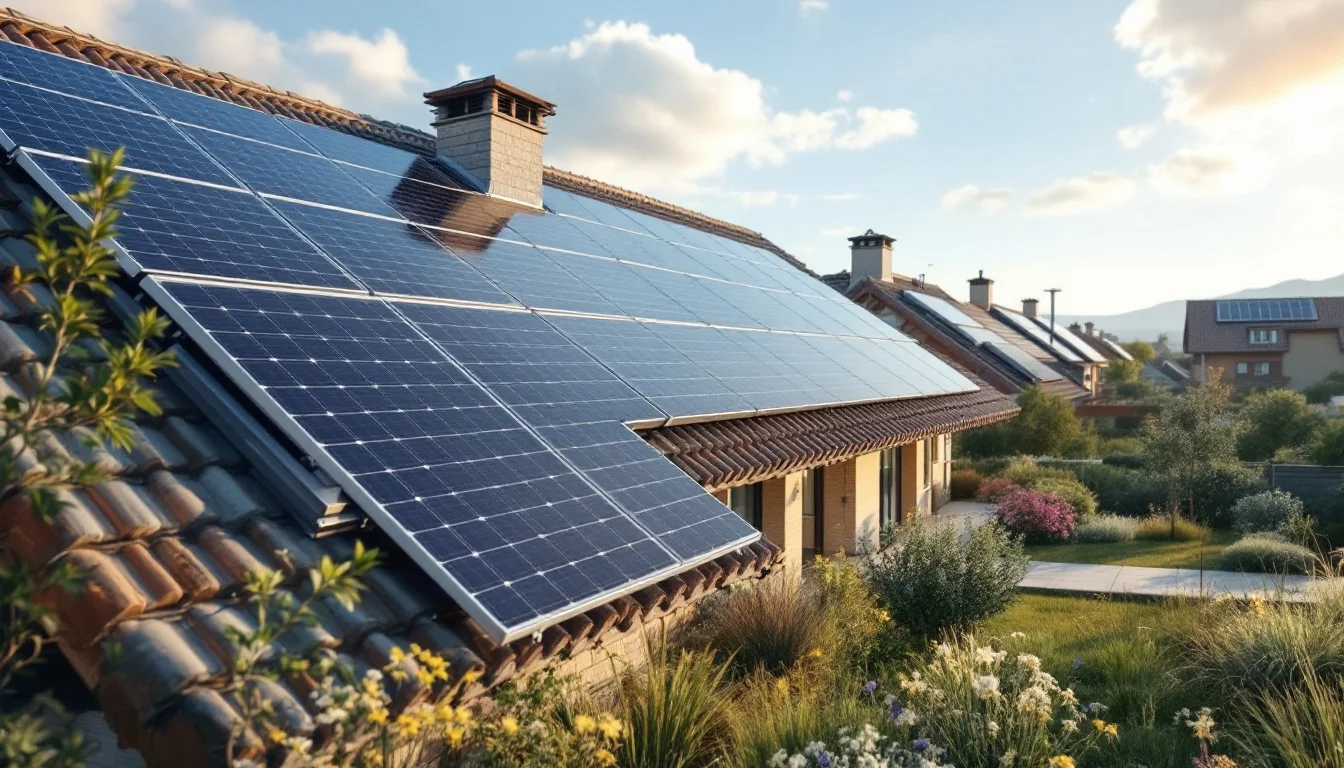
Modern residential energy design has largely abandoned the romanticized vision of complete grid independence. In Spain, most residential solar systems follow the grid-connected model, where panels supply electricity directly to the home's circuits and the installation stays firmly linked to the public grid. Building a highly functional home requires treating photovoltaics not as an isolated asset, but as an active node within the broader utility network.
The success of this integration hinges almost entirely on a strict hybrid architecture. At the center of this setup is the inverter, which operates as the technical brain managing power conversions. Navigating this highly regulated environment demands precise engineering and strict compliance with safety mandates. Fully off-grid systems have become increasingly unnecessary for standard residential developments, which now default to a model that prioritizes seamless synchronization with public infrastructure.
Key Takeaways
- Standardized voltage matching: Inverters must continuously synchronize with the standard Spanish grid alternating current at 230V and 50Hz to power everyday household appliances safely.
- Real-time grid dynamics: The synchronization allows the public network to instantly cover energy deficits while safely absorbing surplus production.
- Export compensation: Compensation for exported electricity relies primarily on the hourly OMIE wholesale market price and specific utility agreements rather than automatic volumetric rollovers.
- Safety shutdown functionality: Built-in anti-islanding mechanisms, compliant with standards like EN 50549-1, detect grid loss via frequency and voltage monitoring to shut down systems within milliseconds during grid outages, protecting utility maintenance workers from backfed electricity.
- Compliance-driven grant programmes: Access to regional funding depends on certified installation, minimum efficiency standards, and documented adherence to grid safety protocols.
The Core Architecture: Standardizing 230V/50Hz for Spanish Homes
The transition from capturing sunlight to powering a modern house relies largely on the technical capabilities of the inverter. This hardware dictates how efficiently the generated direct current interacts with the domestic electrical panel and the external utility network.
Voltage Synchronization
To be useful for daily consumption, the raw power generated by rooftop modules must be converted to match domestic standards. Spanish household electrical installations use alternating current at 230V and 50Hz — the standard Spanish (and European) household voltage — and the inverter is responsible for converting the direct current produced by the panels into this format. If the output drifts from the required 230V/50Hz parameter, the solar array cannot safely supply standard domestic appliances.
System Intelligence and Monitoring
In a standard Spanish residential installation, the inverter performs multiple complex roles beyond simple current conversion. It operates as the central energy manager, continuously optimising panel production across varying weather conditions and fluctuating generation peaks.
Furthermore, the hardware handles the complex task of managing the grid connection, ensuring that the local synchronization remains stable alongside public infrastructure. When homeowners opt for localized energy reserves, this hub is also tasked with managing an optional battery, directing electrical flows based on immediate load requirements. Simultaneously, the system continuously provides monitoring data, allowing residents and technicians to verify that the conversion process remains aligned with the required technical parameters.
The Virtual Battery: Managing Surplus and Self-Consumption in Spain
For modern homes, the public utility network functionally acts as an infinite, real-time energy buffer. In a Spanish grid-connected system, surplus production is exported to the grid, and when production is lower than demand the home automatically draws electricity from the utility network, so no local storage is required for continuous power.
Mapping Energy Destinations
The routing of electricity within the property follows strict operational logic based on immediate demand, available storage, and external grid capacity.
| Destination | Trigger Condition | Technical Manager | Compensation Logic |
|---|---|---|---|
| Direct Consumption | House demand matches or exceeds panel output | Central Inverter | Immediate offset of retail electricity costs |
| Optional Battery | Output exceeds demand; local storage capacity available | Central Inverter | Deferred self-consumption; offsets later retail costs |
| Grid Export | Output exceeds demand; no local storage available or full | Utility meter records grid export for compensation | Compensated financially, primarily indexed to OMIE wholesale market prices |
The Reality of Export Compensation
Understanding the financial return on exported power requires acknowledging a fundamental administrative rule in this jurisdiction. Under Spain's self-consumption framework (Real Decreto 244/2019), exported energy does not accumulate as stored credit. There is no net metering balance where surplus generation in one month offsets a deficit in the next on a volumetric basis.
Instead, exported solar energy is metered separately from imported electricity. The actual financial return for these exported kilowatt-hours is variable, as export compensation is primarily indexed to the hourly OMIE wholesale market price, adjusted for tolls and specific supplier agreements. Because the physical energy surplus is instantly absorbed by the network rather than banked for future use, optimizing the timing of high-draw appliances to match peak generation hours remains an effective strategy for maximizing a system's value.
Non-Negotiable Safety Protocols: Anti-Islanding and Grid Disconnection
While consumers often view their photovoltaic setup primarily as a financial generator, utility operators view active residential hardware as a potential hazard. Grid-connected solar systems in Spain must follow standardized electrical procedures to ensure long-term safety and stability, governed primarily by the self-consumption framework of Real Decreto 244/2019, alongside the technical low-voltage requirements detailed in Real Decreto 1699/2011.
The Anti-Islanding Mandate
When a neighborhood loses power, utility crews are dispatched to repair lines that are supposed to be completely de-energized. If residential solar arrays continued pushing electricity into these dead lines — a scenario known as "islanding" — the resulting backfeed would pose a lethal risk to maintenance personnel.
To eliminate this hazard, grid-connected solar inverters in Spain must shut the system down automatically during grid outages, with modern anti-islanding mechanisms (compliant with EN 50549-1) detecting grid loss via frequency and voltage monitoring to trigger a shutdown within milliseconds. This is a safety requirement to prevent electricity from flowing into disconnected grid lines. In addition to optimising panel production, this anti-islanding protection is a non-negotiable feature. Even when the sun is shining brightly, a standard Spanish home without an isolated backup circuit will lose power entirely during a blackout. This loss of power during an outage is a necessary trade-off for homeowners who opt for standard grid reliance over fully off-grid isolation.
The Compliance Gateway
This technical shut-off capability represents more than just an engineering fail-safe; it is the definitive bridge to regulatory compliance. The presence of a certified anti-islanding mechanism proves that the installation prioritizes the integrity of public infrastructure over local power generation. By mechanically guaranteeing that the home will not backfeed during an emergency, the processing hardware satisfies the core safety demands of utility regulators, allowing the project to proceed to the crucial administrative stage.
The Subsidy Landscape: Technical Prerequisites for Grants
Installing compliant hardware is only the first step in the modern construction process; securing financial incentives requires navigating a highly structured bureaucratic environment. The financial viability of integrating photovoltaics often relies heavily on public funding, which is tightly gated by stringent verification processes and documentation.
Regional Administration and Variability
In Spain, following major national mechanisms like the MOVES programs and Next Generation EU funds, most solar panel grants and subsidies in 2026 continue to be administered at the regional level, so application processes and deadlines vary widely by autonomous community. A strategy that secures funding efficiently in one region may encounter entirely different procedural bottlenecks in another. Builders must consult the specific authorities in their autonomous community — such as the relevant regional energy agency, or the national Instituto para la Diversificación y Ahorro de la Energía (IDAE) for nationally coordinated programmes — to understand local timelines and precise submission requirements.
Technical Prerequisites for Funding
Regional authorities require absolute proof that public funds are supporting safe, high-performing infrastructure. Solar panel grants in Spain typically require systems to meet minimum efficiency standards, filtering out substandard hardware. Furthermore, installations must be carried out by certified professionals.
Crucially, applications must be backed by comprehensive documentation proving legal compliance, grid connection regulations, and safety standards. The required paperwork may reference the hardware's capacity to safely manage standard voltage and execute anti-islanding protocols. Without this certified documentation validating the standardized electrical procedures, even the highest quality panels may fail to qualify for regional financial assistance.
FAQ: Advanced Solar Integration in Spain
How does the system ensure I receive the correct rate for exported power?
The smart meter records exactly what is pulled from the network and what is sent out. This precise tracking ensures that the utility can apply the specific compensation rates dictated by the OMIE wholesale market and your energy contract.What happens on cloudy days if I do not have local battery storage?
When panel production is lower than immediate demand, the home automatically draws electricity from the utility network to maintain continuous power. Local storage acts as an optional addition rather than a strict requirement for everyday functionality.Can I use summer overproduction to offset winter deficits?
No, Spain does not operate on a net metering balance system that banks surplus as volumetric kilowatt-hours for later use. Instead, surplus is compensated financially based primarily on the OMIE wholesale market price and your specific energy contract at the time of export.Conclusion
Modern building design has largely shifted from viewing rooftop modules as standalone electrical generators to treating them as highly regulated nodes within a larger infrastructure. By relying on intelligent inverters that precisely match standard domestic currents while prioritizing public network safety, new properties seamlessly blend self-generation with necessary grid reliance. Ultimately, navigating the regulatory and financial landscape requires recognizing that mechanical compliance and administrative approval are fundamentally inseparable in contemporary Spanish construction.