Passive House Standards in Spain 2026: The True Cost vs. Milder Climate Realities
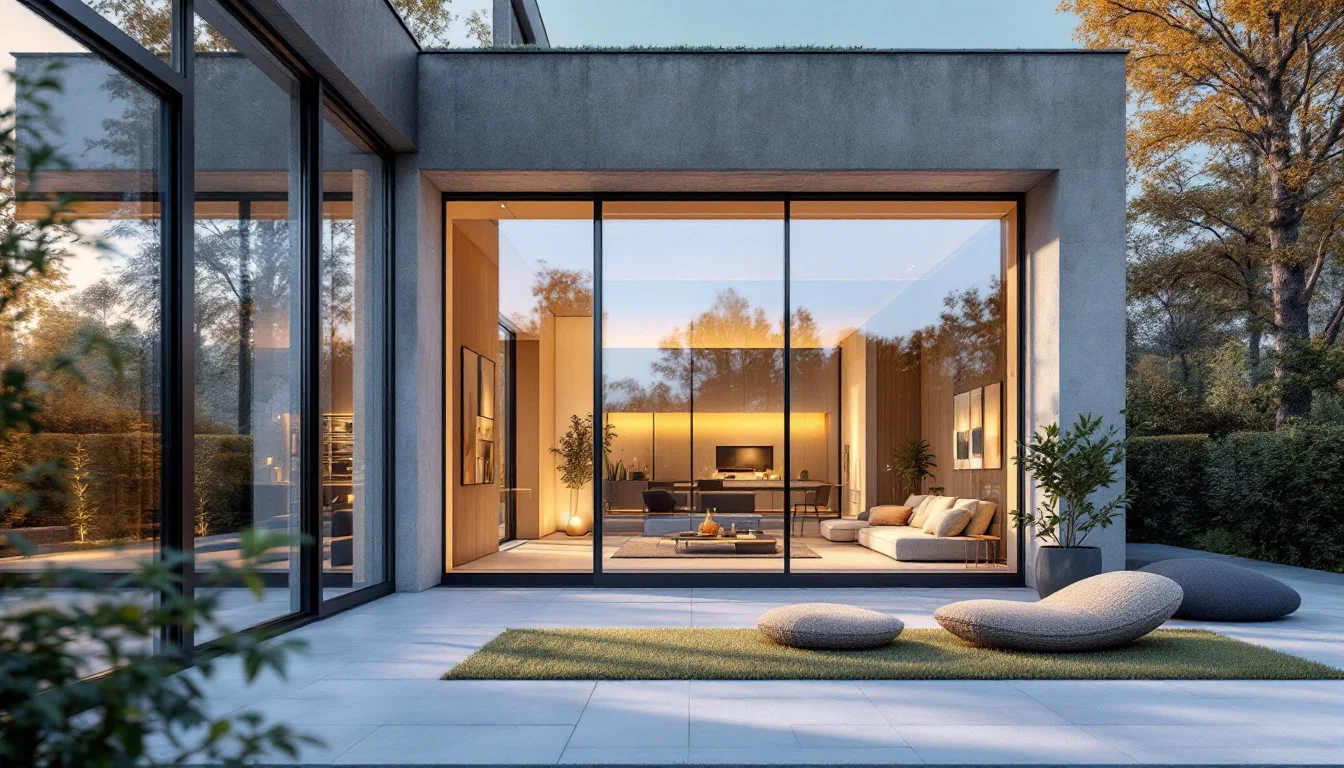
Building a high-performance home in Spain in 2026 involves navigating a complex paradox between international guidelines and local environmental realities. Across the Iberian Peninsula, developers and homeowners are increasingly pursuing the Passive House standard to achieve maximum energy efficiency. However, this pursuit requires balancing a set of stringent rules originally designed for harsh Northern European winters with the distinctly milder, Mediterranean climate of Spain.
It is crucial to understand that the standard developed by the Passive House Institute (PHI) is a private international certification standard issued by a German institute based in Darmstadt. It is applied worldwide, but it is not an EU directive or a Spanish legal building requirement. Because it operates outside of Spanish municipal codes, obtaining the official certification is an elective investment rather than a compliance obligation.
For property buyers and renovators, this creates a strategic decision. Investors must determine whether the upfront capital required to meet rigid, foreign-born architectural criteria translates into tangible financial and comfort returns under the Spanish sun, or whether local climate adaptations offer a more pragmatic approach to energy efficiency.
Key Takeaways
- Strict Baseline Rules: The Passive House Institute (PHI) relies on five core principles, operating as a private international standard rather than Spanish building law.
- Climate Adaptation: Spanish architectural firms emphasize that local projects require different insulation and cooling approaches compared to Northern European counterparts.
- Cost Premium Debate: While a 10% cost premium is often cited, one Spanish architecture firm actively challenges this benchmark; achieving the official certification requires strict compliance with rigid technical criteria, which can impact final budgets.
- Retrofit Alternatives: The EnerPHit standard allows buyers of older Spanish properties to achieve high efficiency by permitting slightly higher energy consumption due to existing structural limitations.
- Resale Value: Property platforms note that passive houses are increasingly viewed as real estate assets expected to yield higher market valuations.
How Does the Passive House Standard Change in a Mediterranean Climate?
To understand the tension between international requirements and local construction, one must look at the foundation of the certification. The Passive House Institute (PHI) has developed two primary building standards: Passive House and EnerPHit. Both of these frameworks are based on the exact same structural philosophy.
What are the Five Core Principles of PHI?
Regardless of where a building is constructed, the PHI mandates adherence to five core principles. These are non-negotiable elements designed to seal the building envelope entirely:
- Very good thermal insulation
- Highly energy-efficient windows
- Controlled mechanical ventilation with heat recovery
- No thermal bridges
- Airtightness
Mediterranean Climate Adaptations
Leukos Architecture, a Spanish PassivHaus architecture firm based in San Javier (Murcia), argues that the application of these rules must respect local geography. The firm notes that Spain needs less insulation than other countries, pointing out simply that "It is not so cold." This geographical difference shifts the architectural focus from heavy winter heating to summer cooling and year-round ambient regulation.
The Spanish firm states that in most areas of Spain, only a very small air-conditioning installation is required to maintain comfort. In fact, depending on the specific region, some areas dictate that no air conditioning is needed, while in others no heating is needed at all. By implementing the core PHI principles, the firm claims — on its undated commercial website, without citing a study or dataset — that a nearly zero energy building consumes on average 90% less energy than a traditional building. This figure should be treated as a commercial claim rather than a measured statistic, as independent studies generally indicate reductions of 75% to 90% specifically for heating and cooling rather than total energy consumption.
Furthermore, the local climate fundamentally changes the cost-benefit analysis of the building materials. Leukos Architecture argues that the extra components required to meet the standard — specifically better windows, a heat recovery system, and more thermal insulation — can actually cost less than a modern air-conditioning system plus its running bill. When executed correctly for the Spanish environment, a PassivHaus aims to maintain an operative indoor temperature generally between 20 and 25 °C during most of the year. In extreme summer heat, achieving this without active mechanical climate control heavily depends on careful orientation, thermal mass, and solar shading, rather than relying solely on the building's basic passive envelope.
What is the True Cost of PassivHaus in Spain?
The financial realities of building to the PHI standard in Spain are often subject to commercial debate, pitting local marketing claims against the rigid administrative hurdles of the certification body itself. Understanding the true financial impact requires dissecting the numbers presented by industry professionals.
Weighing the '10% Premium' Claim
Leukos Architecture (San Javier, Murcia) states on its undated commercial website — without providing measured cost data, a source, or a cost breakdown — that a PassivHaus house is "usually said" to be 10% more expensive than a traditional house. However, the firm actively challenges this benchmark, adding "but maybe not even that." This perspective suggests that as high-performance materials become more common in the Spanish supply chain, the cost gap between traditional builds and passive builds may be narrowing. This is a commercial claim and should not be treated as a market statistic. For illustrative purposes only, a 10% premium on a hypothetical €300,000 build would add €30,000 to the total cost, though this margin heavily fluctuates based on execution risk.
Estimating construction costs based on general averages can be misleading when a buyer intends to pursue the official, audited plaque. The PHI operates with zero tolerance for near-misses. A Passive House/EnerPHit certificate is issued only if the precisely defined criteria are met without exception; a house plaque is available on request.
The Cost of Zero Exceptions
This "without exception" mandate is where the 10% premium claim faces its ultimate test. While local Spanish architects might successfully design a home that requires minimal air conditioning and maintains a stable temperature, achieving the official certification requires passing rigorous quality-control steps, including a pressurization test for airtightness, an adjustment protocol for the ventilation system, and a site manager's declaration.
If a local contractor fails to perfectly seal a thermal bridge or slightly compromises the airtightness during construction, remediating the work to meet the precisely defined criteria can cause budgets to escalate rapidly. Therefore, the financial premium of a PassivHaus in Spain is deeply tied to the skill level of the local labor force and their ability to execute the strict international metrics on the first attempt, rather than just the raw cost of the extra components.
How Can Existing Spanish Properties Achieve the Standard?
Tearing older Spanish structures down to build a new passive home is often financially unviable or legally restricted. To address this, the PHI offers a specific pathway tailored for renovations.
Adapting Existing Spanish Homes
EnerPHit is the established standard for the energy-efficient retrofit of existing buildings using Passive House components. The governing institute recognizes that structural conditions often make the Passive House standard difficult to reach in existing buildings. Walls may be uneven, orientations might be suboptimal, and historical facades cannot always accommodate thick external insulation panels.
To bridge this gap, EnerPHit permits a slightly higher energy consumption allowance compared to a new build, as long as all comfort criteria are still met. This pragmatic adjustment makes it physically possible to apply the five core principles to traditional Spanish masonry without destroying the original architecture.
The Pre-Certification Pathway
For investors executing large-scale renovations in phases, the standard provides structured milestones. PHI pre-certification of an EnerPHit (or Passive House) project requires specific initial steps to ensure the project is on track before final completion.
To secure this pre-certification, the property owner must meet three specific requirements:
- Submit a carefully prepared EnerPHit Retrofit Plan.
- Prove that the first retrofit step has already been implemented.
- Demonstrate that the completed step complies with the applicable component or energy performance criteria.
Renewables and Resale: Is the Official Plaque Worth It?
Beyond operational energy savings, the ultimate question for buyers in 2026 is whether securing the official PHI certification translates into long-term financial equity. The integration of renewable energy and shifting market perceptions in Spain play a major role in this calculation.
Do Plus and Premium Certification Tiers Pay Off in Spain?
As the standard has evolved, the PHI has adapted to the growing viability of solar power, which is particularly relevant in Spain. PHI certification now defines three distinct classes based on renewable generation:
- Classic: The building meets the core passive criteria but features no renewable generation.
- Plus: On an annual average, the building's renewable energy generation equals its energy consumption.
- Premium: On an annual average, the building generates significantly more renewable energy than it consumes.
The ROI of the Official Plaque
From a market perspective, the financial rationale for building passive structures is solidifying. According to an opinion article published on idealista/news (15 May 2023) by Álvaro Vega, regional director of PlanRadar in Spain, many developers and investors already view passive houses as an investment in real estate assets expected to increase in market value in the coming years. This is the stated expectation of the article's author, not a measured market outcome.
Leukos Architecture reinforces this by listing three distinct gains from building a PassivHaus. The first is comfort, noting the benefit of a controlled temperature and filtered air without opening windows. The second is savings directly realized on the electricity bill. The final gain is value for money. The firm emphasizes that a certified house can carry a promotion panel/plaque that signals higher building quality and, consequently, a higher resale value. The private plaque effectively serves as an audited guarantee to future buyers that the property achieves top-tier energy performance.
Frequently Asked Questions About Passive House Certification in Spain
Do I need to hire a local Spanish certifier to evaluate my building?
No. According to the PHI, the certifier does not necessarily have to visit the building. While mandatory tests, such as the Blower Door airtightness assessment, must be performed physically on site by an accredited technician, the documentation and testing data can be submitted digitally. This flexibility means clients are free to choose a certifier irrespective of where they are based. The PHI offers certification to the Passive House, EnerPHit, and PHI Low Energy Building standards worldwide, giving Spanish property developers total flexibility in sourcing their auditing partner.What happens if my Spanish construction project fails the strict airtightness test?
Failing the strict pressurization tests is a common risk when executing complex builds. Fortunately, a separate certification standard, known as the 'PHI Low Energy Building', provides an autonomous framework with less stringent criteria (such as a higher heating demand allowance) for projects that do not fully meet the primary Passive House requirements. This option ensures that investments in high-performance materials still yield recognized accreditation, whether a project intentionally targets this standard or narrowly misses the full Passive House tier.Conclusion: The Future of High-Performance Housing in Spain
As the Spanish real estate sector adapts to increasingly erratic climate patterns, the reliance on high-performance building envelopes will transition from a specialized niche to a baseline expectation. The integration of renewable generation tiers pushes these properties beyond mere conservation, positioning them as active energy assets capable of enduring extreme summer peaks without grid dependency.
The real test for the broader housing market will be how effectively local construction supply chains can scale the delivery of these intricate designs. If the execution of rigorous, airtight architecture becomes standard practice among local contractors, the financial premium currently associated with these certifications may dissolve entirely, setting a new permanent threshold for structural longevity in Southern Europe.