Drylining vs. Traditional Plastering: Budgeting Your Wall Finish in a Spanish Home
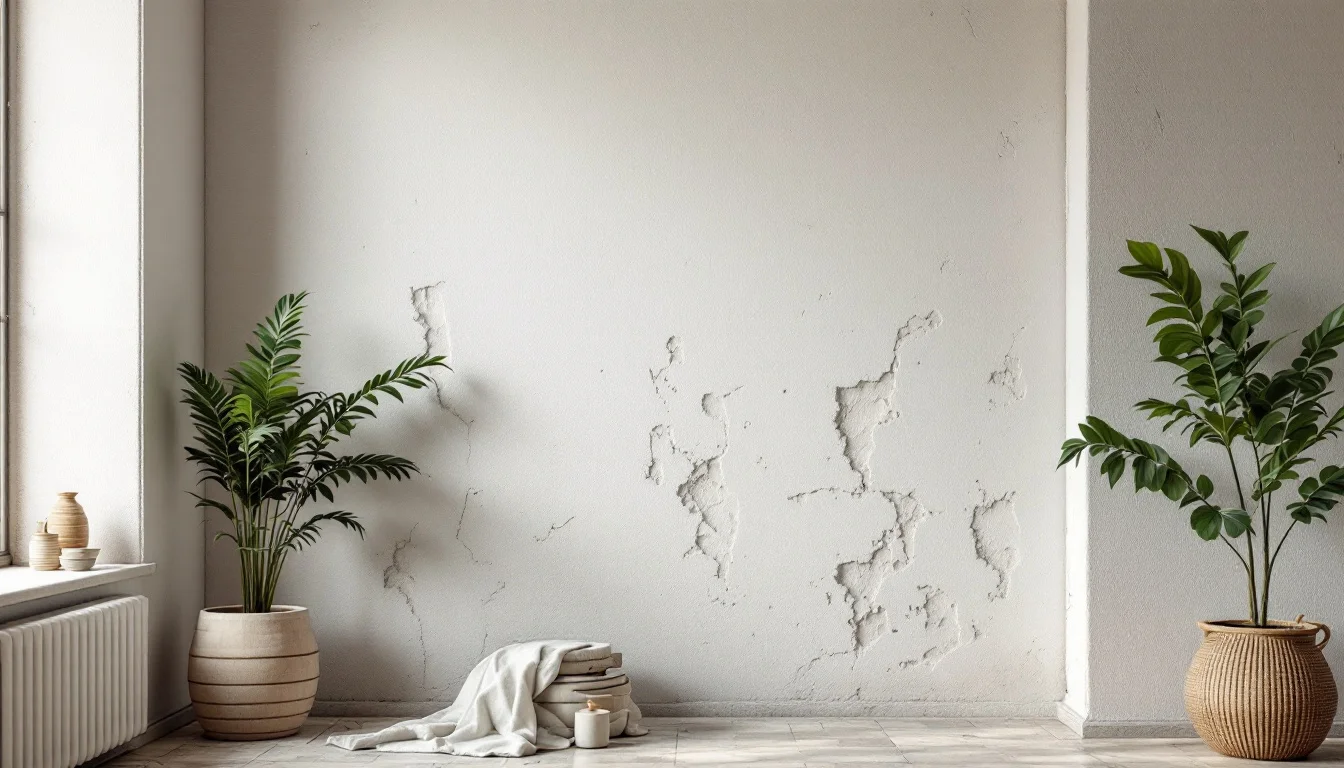
The architectural default for Spanish interiors has historically relied on standard masonry partitions finished with wet materials. Today, the choice of internal wall finish is a critical driver of the overall construction budget. Balancing the speed of modern drylining against the durability of traditional materials requires a clear understanding of regional structural habits. Navigating this choice involves analysing local framing costs, existing masonry, and the mathematical multipliers that dictate the final price of transforming a Spanish property.
Key Takeaways
- Traditional plastering offers long-term durability, particularly in high-traffic areas or environments prone to coastal moisture.
- Dry lining accelerates project timelines by eliminating drying periods, reducing overall site disruption during tight renovations.
- Plasterboard installations in Spain typically rely on metal framing, as timber is relatively expensive.
- Open-plan layouts normally cost less because they reduce the number of partitions and the framing those partitions need.
- Administrative overheads, including the variable municipal licence tax (ICIO) and value-added tax (IVA), apply directly to finishing materials and labour. Readers should verify the exact rates applicable to their project with a registered gestor or their local ayuntamiento, as these vary and the figures cited in this article come from commercial, not official, sources.
The Anatomy of a Spanish Wall: Why Brick and Plaster Dominate
Understanding the regional baseline is essential for any renovation project in the Mediterranean. According to a contributor on ExpatForum discussing Spanish building techniques, internal walls in Spain are generally constructed from hollow brick of varying thicknesses. This is an anecdotal, unverified forum observation rather than an official or survey-backed figure, but it is broadly consistent with practitioner accounts. This foundational masonry approach heavily dictates the subsequent finishing methods employed by local tradespeople.
Because the structural core relies on brickwork, plastering remains the traditional wall-finishing method of choice across the market. This technique involves applying a layer of wet plaster directly onto the wall surface. For decades, applying this heavy, wet material directly to brick partitions has been the standard practice. It is a methodology deeply associated with long-term durability and a timeless architectural aesthetic that defines the classic Mediterranean interior.
While modern alternatives are gaining traction, they face specific structural and material considerations in this market. According to the same ExpatForum contributor, while plasterboard is becoming more common, it is typically installed on a metal frame rather than timber. In this market, metal framing serves as the standard alternative. Unlike Northern European markets that rely heavily on inexpensive timber studwork for partition framing, moving away from direct-to-brick plastering in Spain requires erecting this metal infrastructure. For homeowners dealing with historic properties, traditional plastering is frequently utilised to maintain existing architectural integrity, whereas those executing newer renovations often lean towards dry lining to capitalise on material efficiency and cost savings.
Performance Face-Off: Durability vs. Installation Speed
When evaluating finishes for a property, the choice often requires prioritising either the long-term resilience of the surface or the immediate velocity of the installation process.
The Speed and Efficiency of Drylining
Modern dry lining involves attaching plasterboard directly to interior walls to provide a smooth surface that is immediately ready for decoration. This method is fundamentally described as a quicker and less messy alternative to traditional wet plastering. Dry lining is typically faster to install than plastering primarily because it does not require drying time between successive layers. Consequently, this approach is well suited to projects with tight deadlines or sensitive renovations where the property owner wants minimal on-site disruption. However, while highly efficient, dry lining may show visible joints and a slightly different surface texture than traditional walls unless careful installation and specialised finishing techniques are strictly followed.The Resilience of Traditional Materials
Conversely, traditional plastering is generally described as more durable than dry lining. This structural robustness makes it favourable for specific environmental conditions commonly found in the region. Plastering is particularly valuable in high-traffic areas of a home or in coastal environments that are prone to moisture accumulation.Furthermore, plastered walls are said to be inherently less susceptible to everyday impact damage. Because the solid plaster bonds directly with the underlying masonry, it provides a rigid surface that is more resistant to structural cracks and cosmetic dents over the lifespan of the property. For owners prioritising a finish that will withstand intense physical wear without requiring frequent touch-ups, the slower installation time of wet plaster is offset by its sustained structural integrity and seamless appearance.
The Cost Multiplier: Partitions, Framing, and the Open-Plan Advantage
The financial implications of wall finishing choices must be analysed against the broader backdrop of regional construction pricing. According to commercial estimators such as Estudio Cabana, general construction costs vary significantly by province, with baseline budgets escalating substantially as projects move from standard or average quality builds to luxury or high-end specifications (excluding the cost of the land).
The Mathematics of Build Costs
To calculate realistic estimates, Estudio Cabana lists recommended mathematical correction coefficients for Spanish build-cost estimates. Project complexity adjusts the baseline by ×1.1–1.3, finish quality by ×1.2–1.6, and terrain conditions by ×0.9–1.4. Idealista (2024) identifies the selection of materials and finishes as one of the critical key points for keeping a Spanish house-building budget under control, since any extra unit cost is inexorably multiplied across the total number of units or square metres needed for the project. To illustrate how drastically finishing choices impact the final budget, Estudio Cabana highlights that a standard project with basic finishes can see its total budget nearly double for the exact same floor area if high-end finishes are specified. Furthermore, data cited by Estudio Cabana from Autopromotor.info indicates that the cost per square metre generally tends to decrease as the overall floor area becomes larger.Layout Strategy and Framing Costs
Synthesising Idealista's finding that open-plan layouts reduce costs with the observation that plasterboard in Spain relies on metal stud framing demonstrates a crucial budgeting dynamic.Idealista (2024) notes that an open-plan layout featuring few partitions, walls, or internal doors is normally less costly to execute than a more complex layout, which inherently requires more material. Because installing plasterboard in Spain relies on metal framing, choosing to erect multiple dry-lined partition walls requires additional material expenditure. By contrast, embracing an open-plan design circumvents the need for partition studs, whether metal or timber. Removing internal walls from the architectural plan stops unit costs from multiplying across the floorplan, helping to keep the overall renovation budget within the lower bounds of Estudio Cabana's standard pricing tier.
The 2026 Spanish Wall Finish Decision Matrix
Determining the correct finishing methodology requires mapping the specific architectural realities of the property against the desired final aesthetic. The physical condition of the existing structure often dictates the most viable approach.
The table below summarises a qualitative decision matrix for Spanish home renovations, scoring Drylining vs Traditional Plastering on Speed, Suitability for Curved/Old Walls, Moisture Durability, and Finish Quality.
| Assessment Criteria | Drylining (Plasterboard) | Traditional Wet Plastering |
|---|---|---|
| Speed & Disruption | High speed; no drying time required between layers. | Slower installation; extensive drying periods necessary. |
| Curved & Old Walls | Works best on straight, even structural walls. | Highly suitable; can be shaped to irregular surfaces. |
| Moisture Durability | Standard boards have lower resistance to moisture and impact dents, though moisture-resistant variants exist. | Generally higher durability; more resistant to moisture and cracks. |
| Finish Compatibility | Smooth surface immediately ready for standard paint. | Forms the vital structural basis for specialised local finishes. |
Dry lining works best on straight, even walls, making it well suited to modern villa renovations that feature clean geometric lines. Conversely, plaster can be shaped and meticulously applied to curved, irregular, or uneven surfaces—which makes it especially useful in older buildings or historic fincas that boast unique architectural features. Furthermore, for a Spanish home, the finishing options presented by one Costa del Sol builder (Gerards Buildmasters) run from basic pre-treatment and plastering to classic whitewashing and finishing with modern concrete ciré. In these advanced applications, the traditional plaster is described as forming the necessary basis for the final specialised finish.
Navigating Taxes and Local Bureaucracy
Beyond the physical materials and labour required to finish internal walls, property owners must account for the administrative and regulatory costs attached to the building process. Value-added tax (IVA) and the local municipal building licence tax (ICIO) apply directly to finishing materials and labour; however, the specific rates vary and readers should verify the figures applicable to their project with a registered gestor or their local ayuntamiento before relying on any published estimate. Commercial portals like Idealista (2024) note that the overall estimated construction budget for single-family homes generally absorbs these licences, professional fees, materials, and taxes.
Conclusion
The composition of build costs and an increasing preference for open layouts shape how interior spaces are finalised in the Mediterranean market. Since adding internal partitions requires material investment in brick or metal framing, strategic layout planning becomes an exercise in strict financial management rather than pure design preference. Moving forward, balancing the enduring aesthetic of classic plaster against the rapid execution of modern board systems requires renovators to evaluate their structural priorities long before the first partition is erected. Additionally, one commercial builder on the Costa del Sol emphasises that optimising these interior wall finishes should always be paired with proper exterior façade insulation to effectively keep the summer heat outside and the winter warmth inside.