Construction Site Compliance in Spain: The Chain of Liability for Equipment and Subcontractors
Who is Liable for Subcontractor Equipment on Spanish Construction Sites?
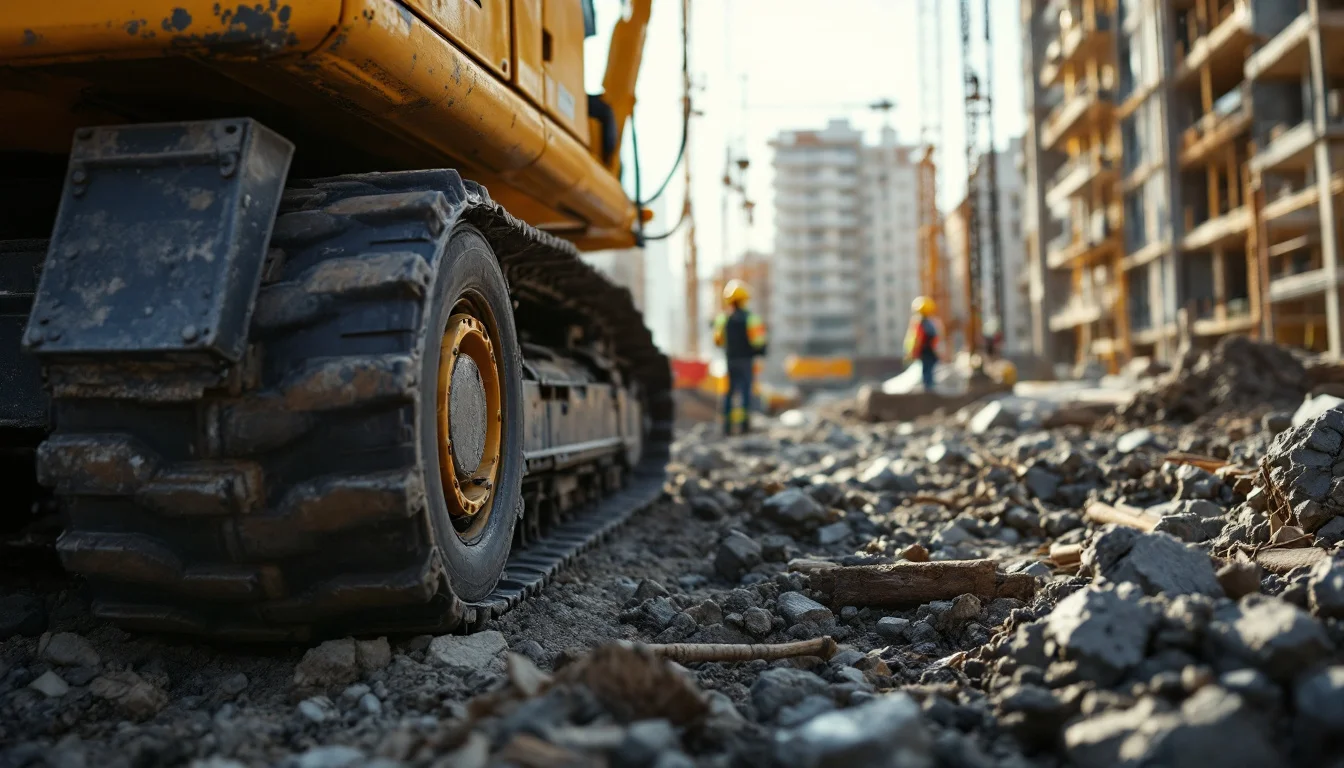
A common misconception on Spanish construction sites is that the physical owner of a piece of equipment holds sole responsibility for its safe operation. When a subcontractor rolls an excavator, crane, or aerial lift onto a shared construction site, the legal burden for that machinery shifts upward.
Key Takeaways
- The main contractor bears the Coordination of Business Activities (CAE) verification duty.
- Royal Decree 1215/1997 governs machinery and equipment requirements.
- Royal Decree 1627/1997 establishes minimum safety and health requirements on sites.
- Act 32/2006 and the Register of Accredited Companies (REA) limit the subcontracting chain.
- Missing CAE documentation can trigger severe penalties under the LISOS framework.
Enforcement of Spanish workplace health and safety regulations is overseen by two primary authorities. The Labour Inspectorate (Inspección de Trabajo y Seguridad Social) actively conducts site inspections and enforces compliance through punitive measures. Concurrently, the National Institute for Safety and Health at Work (INSST) provides non-binding technical guidance and recommendations to support safe operations.
What is the Regulatory Hierarchy for Machinery on Spanish Sites?
Managing machinery compliance requires navigating a specific, three-tiered legal structure. Regulations cascade comprehensively from general worker safety directives down to the precise mechanical use of physical assets.
The Baseline Health and Safety Law
At the top of the legal hierarchy sits the Law on the Prevention of Occupational Risks (Ley de Prevención de Riesgos Laborales, LPRL - Law 31/1995). The primary law governing workplace health and safety in Spain, the LPRL establishes the universal principles of risk assessment, active worker protection, and overarching employer responsibility. It transposes EU Framework Directive 89/391/EEC into Spanish law and dictates the fundamental duty of care that applies to every sector.
Construction-Specific Site Regulations
Because active construction environments introduce unique, multi-employer hazards that a standard workplace does not, the broad mandates of the LPRL are filtered through Royal Decree 1627/1997. This decree governs the minimum safety and health requirements specifically on construction sites in Spain. It establishes the mandatory rules for site organization, dictates the necessary roles of health and safety coordinators, and mandates the collective protection measures required when multiple specialized trades operate simultaneously in a high-risk zone.
Direct Equipment Mandates
Royal Decree 1215/1997 regulates the use of work equipment in Spain — the regulation most directly applicable to construction machinery on site. It ensures that all equipment brought onto a site is suitable for the intended work, properly maintained, and outfitted with mandatory safety features. Consequently, a single machinery violation directly breaches this equipment decree, compromises the site safety rules of RD 1627/1997, and violates the foundational occupational risk law of the LPRL.
Why is Subcontractor Equipment the Main Contractor's Legal Problem?
In Spain, a main contractor cannot simply hire a subcontracted entity and assume that the secondary company will manage its own operational compliance independently.
Controlling the Subcontracting Chain
Act 32/2006 regulates subcontracting in Spain to prevent unregulated, endlessly multi-tiered labor environments that obscure safety accountability. It strictly limits the subcontracting chain and requires every subcontractor to be registered in the Register of Accredited Companies (REA). To achieve this registration, the act legally mandates that every subcontractor must possess its own concrete organizational structure and necessary material resources, proving they are a legitimate business rather than a shell entity providing unverified labor.
The CAE Liability Map
The regulatory structure creates a direct compliance flow demonstrating how machinery safety rules intersect with subcontracting laws to bind the main contractor:
- Asset Mandate: Royal Decree 1215/1997 regulates the use of work equipment in Spain, requiring that all equipment on site is suitable, properly maintained, and outfitted with mandatory safety features.
- Verification Mandate: Coordination of Business Activities (CAE) requires the main contractor to gather, verify and keep the preventive documentation of every subcontractor and self-employed worker on a shared Spanish workplace.
- Liability Transfer: Failing to verify required training or the handover of personal protective equipment can make the main contractor jointly or subsidiarily liable in the event of a workplace accident in Spain.
What Documents Must a Main Contractor Keep on a Spanish Site?
To clear an audit by the Labour Inspectorate, the main contractor must establish and maintain complete and current documentation that unequivocally proves real and effective site coordination. This documentation must be systematically generated, securely held, and explicitly approved in a strict chronological sequence.
Initial Planning and Strategy
The mandatory regulatory paperwork begins long before any contractors arrive at the location. A Health and Safety Study or Basic Study is mandatory documentation for a Spanish construction project; it is drafted by the competent technician during the project stage. This foundational technical document meticulously identifies the specific structural risks associated with the planned architecture, the surrounding site conditions, and the anticipated machinery required for the build.
Operational Site Approvals
Once the project is formally awarded, the theoretical study must translate into an actionable, site-specific guide. The Occupational Health and Safety Plan (PSS) is the sole responsibility of each main contractor; it must be prepared from the site's Health and Safety Study and approved by the safety coordinator before work begins. This comprehensive plan details exactly how the main contractor intends to implement the necessary safety measures, dictating operational protocols for all specific equipment and specialized trades utilized throughout the project.
In addition, the opening of the workplace (apertura del centro de trabajo) is a mandatory filing with the competent labour authority before work begins.
Real-Time Tracking and Enforcement
During active construction, the focus firmly shifts to tracking daily operations, site access, and personnel. A Subcontracting Log is mandatory documentation on Spanish construction sites: it is an up-to-date record of every company and self-employed worker involved in the works. This log directly ties into the REA and CAE requirements, ensuring the main contractor maintains total visibility over who is present.
Simultaneously, the site administration must maintain accurate incident records. The Incident Log is mandatory on every Spanish construction site where a safety study or basic study exists; it is held by the health and safety coordinator or the project management team and must be kept available for the Labour Inspectorate at all times. This ensures transparency in how risks, mechanical failures, and procedural infractions are addressed.
What Training Must an Operator Hold?
Ensuring a specific piece of machinery physically complies with technical safety standards addresses only half of the regulatory compliance equation. The overarching legal liability extends deeply into the professional qualifications and physical readiness of the individual sitting in the operator's cab. Spain enforces heavily standardized training requirements that cannot be circumvented with internal, unaccredited company certifications.
Under the General Sector Agreement for Construction in Spain, every worker must hold either the basic initial training of 8 hours or the trade-specific training of 20 hours, delivered by a body accredited by the Construction Labour Foundation (Fundación Laboral de la Construcción). This mandates a baseline of standardized occupational education before any worker is permitted to interact with heavy machinery or navigate high-risk site zones.
The main contractor's comprehensive CAE obligations intersect directly with these operator requirements. Before an operator can power on a machine, the main contractor must actively verify their training certification. Overlooking human compliance elements can trigger the exact same joint liability as allowing an uninspected, failing excavator on site. Operator readiness and accredited training verification are treated with the same legal gravity as the mechanical and structural integrity of the equipment itself.
What are the LISOS Fines for Missing Documentation?
The financial and structural consequences for failing to maintain this extensive documentation and strict compliance framework are severe. Administrative penalties for breaching Spanish site safety regulations are classified as minor, serious, and very serious, scaling based on the specific nature of the violation and the resulting risk exposure.
The Broad Spectrum of Penalties
Non-compliance with Spanish workplace health and safety regulations can result in fines ranging from €40 to €819,780 depending on the severity of the violation, criminal liability in cases of gross negligence leading to serious injury or death, and temporary or permanent business closure. This broad spectrum gives regulatory bodies authority to penalize main contractors who fail their oversight duties.
If an incident does occur despite preventive efforts, rapid and transparent compliance is legally mandatory. Serious, fatal, or collective workplace accidents in Spain must be reported to the labour authority within 24 hours. Failing to meet these strict reporting deadlines compounds the initial safety violation with administrative obstruction penalties.
Resolving the Fine Discrepancy
The reality of Spanish enforcement is harsh when dealing with subcontractor oversight. Failing to hand over Personal Protective Equipment (PPE) can lead to fines of up to €40,985 under the serious-infraction band of Spain's Law on Infringements and Penalties in the Social Order (LISOS). While minor general infractions sit in the lower tier, missing the crucial CAE paperwork for a subcontractor's machinery or personnel can trigger the higher penalty bands.
Very serious OHS infringements in Spain for missing individual or collective protection measures can reach amounts between €40,986 and €819,780, plus the possible immediate stoppage of the works. Therefore, a lapse in verifying a subcontractor's equipment documentation is not treated as a minor administrative error; it is prosecuted as a very serious failure to provide essential protections, exposing the main contractor to financial penalties and immediate site shutdowns.
Ultimately, the rigid enforcement of these regulations transforms the role of the main contractor into a comprehensive risk auditor. As equipment continues to modernize and site complexities grow, relying on basic contracts will no longer shield businesses from liability. Maintaining proper CAE documentation operates as a defense in inspection proceedings, cementing proper verification as a standard operational requirement in the Spanish construction sector.